
GuidesОпубликовано 11 июля 2026 г.
Riding Safely in Bali's Rainy Season: What to Know
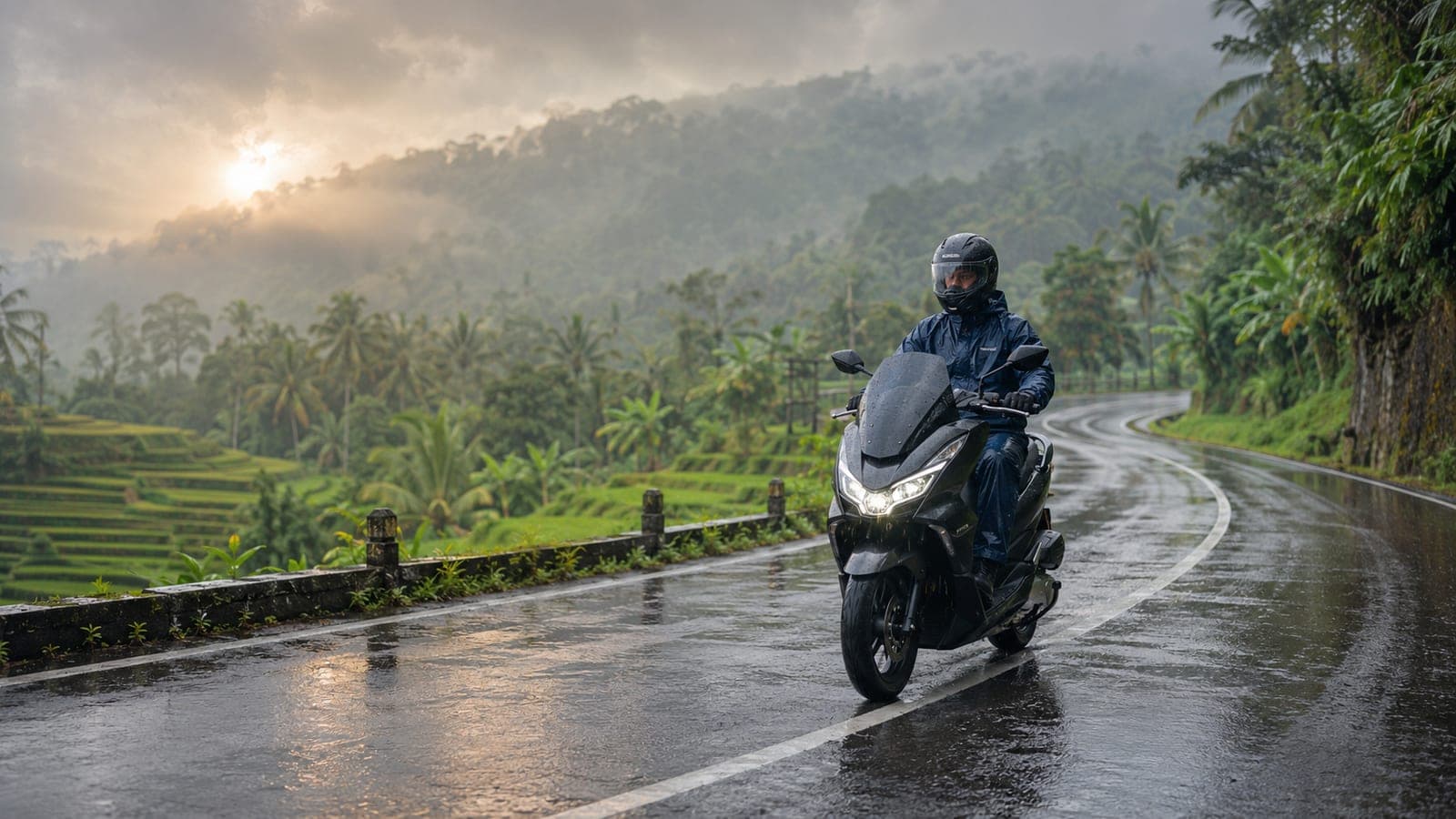
Bali's rainy season runs roughly from November through March, with the heaviest downpours typically arriving in the afternoon rather than first thing in the morning. It doesn't mean you should avoid riding — most visitors ride through the wet season without incident — but a few adjustments make a real difference.
Roads get noticeably more slippery in the first few minutes of rain, before the water has washed away the built-up oil and diesel residue on the asphalt. If a downpour starts while you're riding, easing off rather than pushing on through the first five minutes is worth the short delay.
Visibility drops fast in heavy rain, both yours and other drivers'. Slow down, increase the distance you leave to the vehicle ahead, and avoid overtaking until conditions clear. Standing water can hide potholes, so give flooded sections of road a wide, cautious berth rather than riding through at speed.
Check your tyre tread before a longer trip — worn tyres lose grip far faster in the wet than on dry roads. It's a quick visual check worth doing on any rental bike before you set off.
Pack a proper poncho rather than relying on an umbrella or waiting it out under an awning indefinitely — Bali downpours can last an hour or more. If you're planning a longer day trip inland or up to the highlands, check the weather forecast that morning and build in a buffer, since mountain roads are where sudden rain has the biggest effect on visibility and grip.
None of this should discourage riding in the wet season — it's simply a matter of building in a bit more caution and a bit less schedule pressure than you might on a clear dry-season day.
← Назад к новостям